Avocado Ripeness Test: A 3-Point Checklist for Perfect Fruit
A ripe avocado is a narrow window. Get it right and you have something buttery enough to spread on toast with nothing more than salt and a squeeze of lime. Get it wrong and you are either sawing into a fruit with the texture of a candle, or scraping brown streaks out of one that went from firm to forgotten overnight. The trick is not to rely on a single clue. Skin colour can lie, one soft spot can mislead you, and squeezing with your fingertips only bruises the thing. Three checks, done in the right order, will tell you almost everything.
Why no single test works on its own
Avocados ripen unevenly. The flesh around the stone softens at a different rate from the flesh under the skin, and a fruit can feel perfect at the neck while staying firm at the base. Chill it and the whole thing stiffens up again. Growers also pick at different stages, and the variety matters: what looks nearly black in one punnet may be a naturally green-skinned type that never darkens at all.
So treat the three checks below as a panel rather than a single verdict. Two out of three is usually enough to make a decision. Three out of three means you can be confident.
Point one: the stem cap
At the top of the avocado, where it was cut from the tree, sits a small dried nub — often called the stem cap or button. It is the most honest indicator you have, because it shows what is happening in the hollow just beneath the skin.
Press a thumbnail under the edge of the cap and lift it off gently. What you find underneath tells you plenty:
- Green underneath, cap lifts easily: ripe, or very close to it. Use within a day or two.
- Pale yellow-green and dry, cap resists: unripe. Give it two to four days at room temperature, longer in a cool kitchen.
- Brown or black underneath: overripe or damaged. Expect streaky, stringy flesh near the top of the fruit.
One caution: pulling the cap off exposes a patch of flesh to the air, so only do it when you are likely to eat the avocado soon. If you check one in the shop and decide to leave it, put it back gently and choose another instead.
Point two: gentle pressure in the palm
This is the check most people get wrong, usually by poking with a fingertip. Fingertips bruise; palms do not. Cup the avocado in your hand and press lightly with your thumb or the flat of your fingers in two places — the narrow neck near the stem and the wider middle. Softening rarely happens evenly, so a single spot can flatter a fruit that is still hard an inch away.
What you are feeling for is resistance with a little give, roughly like a ripe peach or the fleshy pad at the base of your thumb.
- No give at all: unripe. Do not refrigerate it; cold stops the process.
- Springs back slightly and feels dense: ready now.
- Sinks under light pressure, feels hollow or sloshy: past its best. Check the stem cap before you decide what to do with it.
A cold avocado always feels firmer than it really is. If it has come straight out of the fridge, leave it on the worktop for half an hour before judging it by touch.
Point three: colour and skin texture
Colour is the least reliable of the three, but it still earns its place as a supporting clue. A Hass avocado shifts from bright green through dark green to a deep purple-black as it ripens, and the skin loses its shine along the way. A ripe Hass is usually uniformly dark, with a slight yield at the neck when you press it.
The catch is that plenty of varieties ignore that rule entirely. Fuerte, Bacon, Pinkerton and the long, smooth, green-skinned avocados sold in many supermarkets stay green from rock-hard to overripe. If the fruit in your hand is slim and green-skinned, colour tells you nothing. Lean on the stem cap and the pressure test instead.
Watch for skin that is dull and dented, or marked with deep sunken patches. That is usually bruising or chill damage rather than ripeness, and the flesh beneath it will be discoloured.
The three-point checklist, in order
- Look at the skin. Does this variety darken as it ripens? Note the shade, but do not decide yet.
- Press gently with the palm in two places. Hard means wait; slight give means likely ready.
- Lift the stem cap, but only if you plan to eat it soon. Green underneath confirms it.
If all three agree, buy it and eat it within a day. If the cap is green but the fruit still feels firm, it is a day or two away — ideal if you are planning ahead rather than cooking tonight.
What to do next: underripe, ripe and overripe
An underripe avocado will ripen happily on the worktop, out of direct sun. Putting it in a paper bag with a banana or an apple speeds things up, because those fruits release ethylene gas and the bag traps it around the avocado. Check daily once it starts to soften, because the final stage happens quickly.
A ripe avocado can be held back in the fridge for two or three days. The cold will not improve it, but it will slow it down usefully. Take it out half an hour before you eat.
An overripe avocado is still worth keeping. Blend it into a dressing, mash it with lime and chilli, or fold it through a chocolate cake batter. What you should not do is pretend the brown streaks are fine — cut them away and taste a small piece before you commit the rest.
Once cut, avocado discolours fast. Leave the stone in, press cling film directly onto the exposed flesh, and refrigerate. A squeeze of lemon or lime helps a little too.
Before you cut
Ripeness is a moving target, so buy two: one that is ready for today and one that needs a couple of days. Keep the firm one at room temperature and move it to the fridge only when it has come good. Then the whole business stops being a guessing game and becomes a simple question of which one to open first.
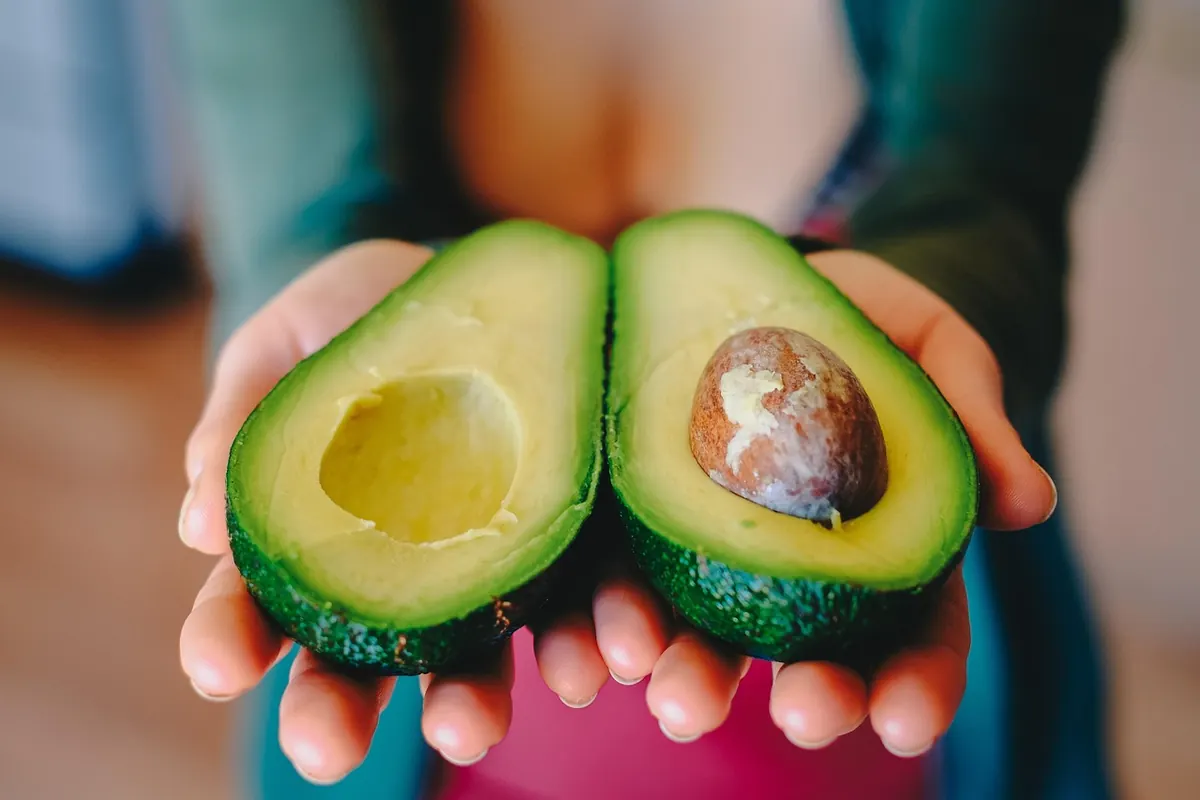
Photo: coyot / Pixabay