Beginner's Guide to Ethylene Gas and Fruit Ripening
An avocado that feels like a cricket ball on Monday can be perfect by Thursday — and past its best by Friday. That swing has very little to do with luck. It is mostly the work of a single gas.
Ethylene is why the banana in your fruit bowl can hurry along the pears beside it, and why a plain paper bag often does more than a sunny windowsill. Once you know what the gas is, which fruits make it, and how to trap or disperse it, you can stop guessing and start steering.
What ethylene gas actually is
Ethylene, or C2H4, is a colourless, odourless gas and the simplest of the plant hormones. You will not smell it or see it. You will only see what it does.
Fruit produces ethylene naturally as it ripens, and also in response to bruising, cutting, chilling or stress. The gas switches on enzymes that soften cell walls, turn starch into sugar, reduce acidity and build the aromas and colours we associate with ripe fruit. Green chlorophyll breaks down too, which is why a hard green pear eventually turns gold.
The clever part is that the process feeds itself. Ripening produces ethylene, and ethylene produces more ripening. That is why a rock-hard pear can go from woody to fragrant in two days. It also explains why ethylene matters in your kitchen rather than only in a laboratory: it is a gas, so it drifts. It moves through the air from one fruit to its neighbours, and it lingers in enclosed spaces such as bags, bowls and fridge drawers.
Commercial growers use the same gas in ripening rooms to bring bananas and tomatoes to the shelf at exactly the right moment. At home, you have smaller tools: a bag, a bowl, a fridge and a bit of patience.
Which fruits produce ethylene — and how much
Fruits fall into two broad groups. Those that continue ripening after picking are called climacteric, and they are the ones you can genuinely influence at home. Most are generous ethylene producers.
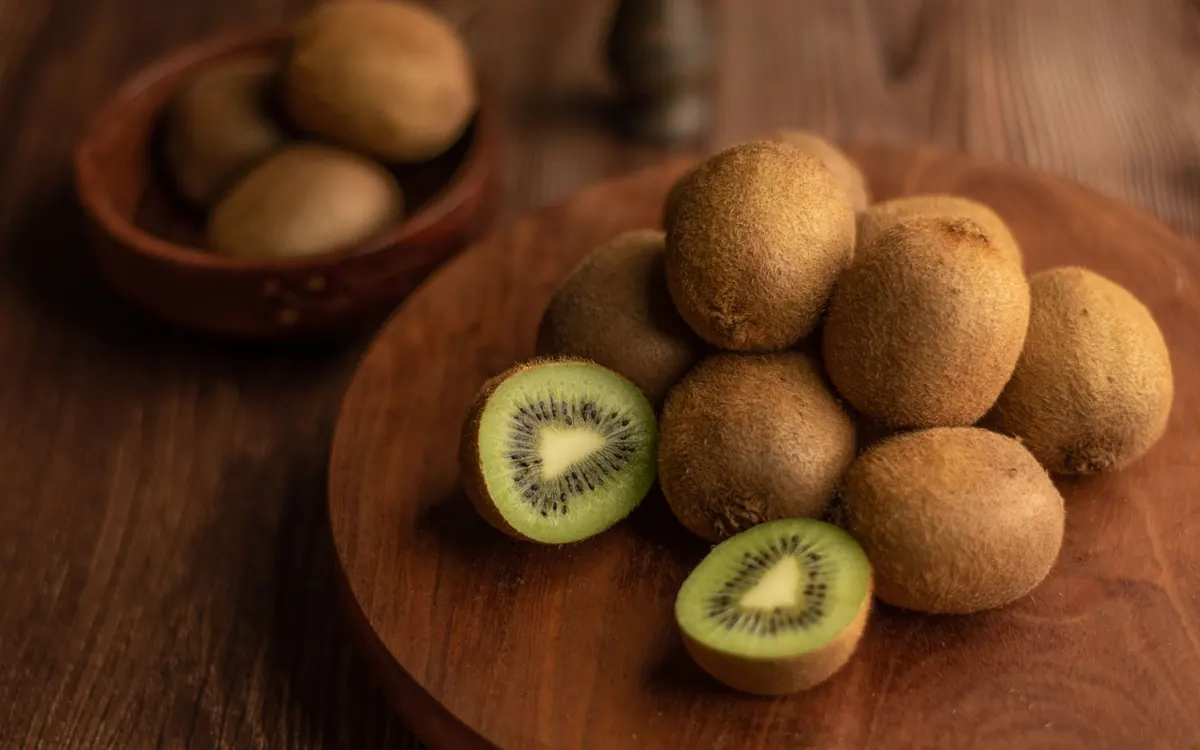
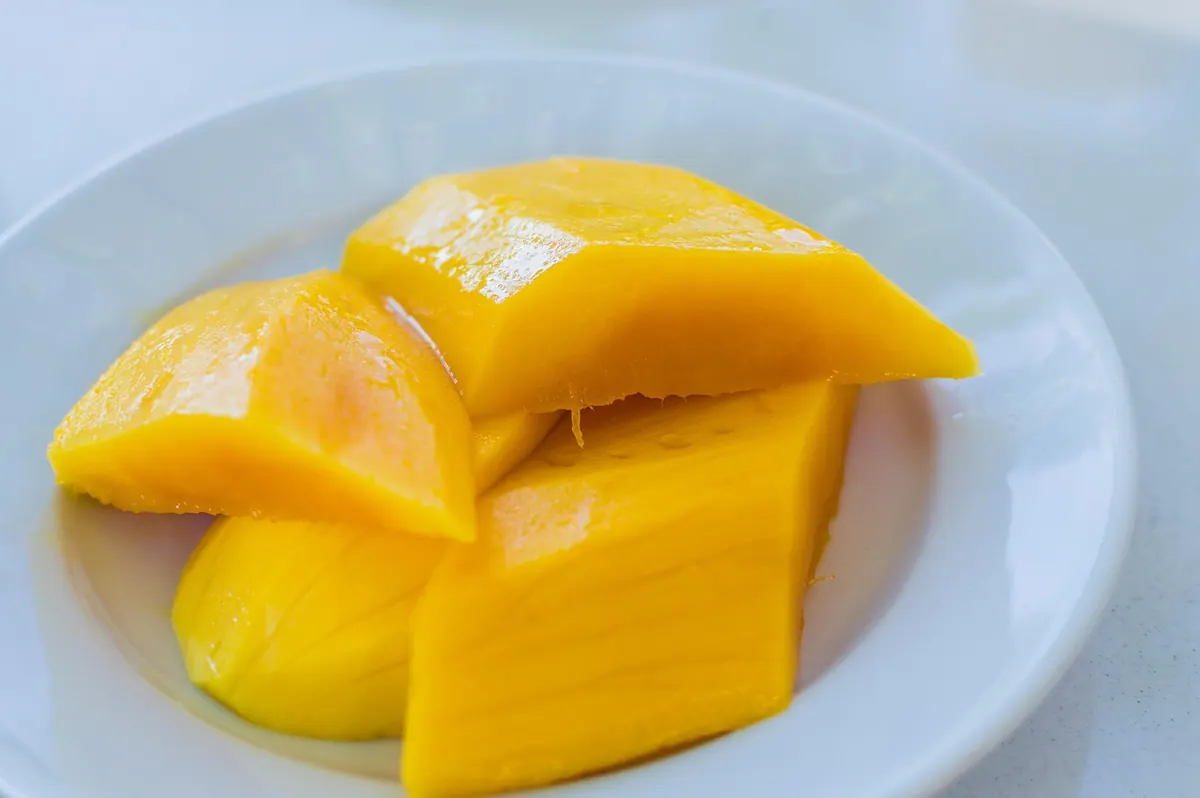
- Heavy producers: apples, bananas, pears, avocados, peaches, nectarines, plums, apricots, mangoes, papaya, kiwi, figs and tomatoes.
- Moderate producers: cantaloupe and other orange-fleshed melons.
- Low producers: berries, cherries, grapes and citrus fruits.
This is the group where a paper bag earns its keep. A hard peach, an unripe avocado or a firm mango will all respond to a boost of ethylene around them.
The fruits that don't ripen after picking
Non-climacteric fruits are as sweet as they will ever be the moment they are picked. Strawberries, raspberries, blueberries, blackberries, cherries, grapes, citrus, pineapple, watermelon and pomegranates all belong here. They may soften or lose shine in your kitchen, but they will not gain sweetness. A pale strawberry will not become a sweet one.
Buy these ripe, eat them soon and refrigerate them. No bag, no banana, no waiting. If they are underripe, your only realistic options are cooking, blending or a sharp dressing.
Speeding ripening up: the paper bag method
Trapping ethylene around a fruit raises its concentration and shortens the wait. A brown paper bag is ideal: it holds the gas in while letting a little air move, so the fruit does not sweat and go mouldy. A bowl with a plate resting on top works too.
- Pick your container. Paper bag, or a bowl loosely covered. Avoid sealing fruit in an airtight plastic box, which traps moisture and invites rot.
- Add one helper. A ripe banana, apple or pear releases plenty of ethylene and will pull an unripe companion along. One is enough; a whole bag of ripe bananas will simply overdo it.
- Fold the top loosely. You want the gas held near the fruit, not the fruit suffocated.
- Leave it at room temperature, out of direct sun. A comfortable room, roughly 18–22°C, is fine. The fridge will stall the whole process.
- Check every day. Squeeze gently near the stem end. A ripe avocado yields slightly; a ripe peach smells sweet at the stem.
- Move it to the fridge once it's ready, unless it is a banana or a tomato — see below.
Typical timings: bananas in a bag with an apple can be ready in a day or two; a hard avocado usually takes one to three days; firm peaches, plums and kiwis often two to four. If the bag starts to smell fermented or you spot mould, bin the contents and start again with fresh fruit.
Slowing ripening down
When fruit is ripe and you want a few more days, your job is to reduce ethylene around it and slow the fruit's response to it.
What actually works
- Separate the producers. Move apples, bananas and pears away from everything else. A bowl of apples can accelerate a whole countertop.
- Refrigerate once ripe. Cold slows both ethylene production and the fruit's reaction to it. Stone fruit, berries, grapes, melons and ripe avocados all benefit.
- Keep bananas out of the fridge until you are ready to accept a blackened skin. The flesh inside stays firm and sweet for longer, which is fine for smoothies and baking, less pretty on a bowl.
- Store tomatoes at room temperature for flavour, and only refrigerate them if they are about to go over. Cold dulls their aroma.
- Buy in stages. One ripe avocado for today, two hard ones for later. You are managing a schedule, not a shopping list.
Keep these two groups apart
Ethylene does not just ripen things. It ages them. Leafy greens, broccoli, cabbage, asparagus, cucumbers, courgettes and carrots are sensitive to the gas: stored next to apples or bananas, they yellow, toughen and wilt far sooner than they should.
Keep your salad drawer fruit-free for that reason. Potatoes are another candidate for a dark cupboard away from the fruit bowl, since ethylene encourages them to sprout. Lettuce, herbs and green beans all last noticeably longer when they are nowhere near a ripe banana.
A simple routine that works
Check the fruit bowl once a day, ideally at the same time. Anything rock-hard goes into a paper bag with one ripe helper. Anything ready moves to the fridge, or onto the chopping board. Anything producing a lot of ethylene — the bananas, the apples, the ripening pears — stays at the other end of the counter from the greens.
That is really all there is to it. Ethylene is not complicated once you can picture it drifting out of a ripe banana and settling over everything nearby. Work with it and you will waste less fruit, and eat more of it at its best.
Photo: euphoricpaper / Pixabay